Trauma Healing for Women: A Gender-Specific Recovery Guide
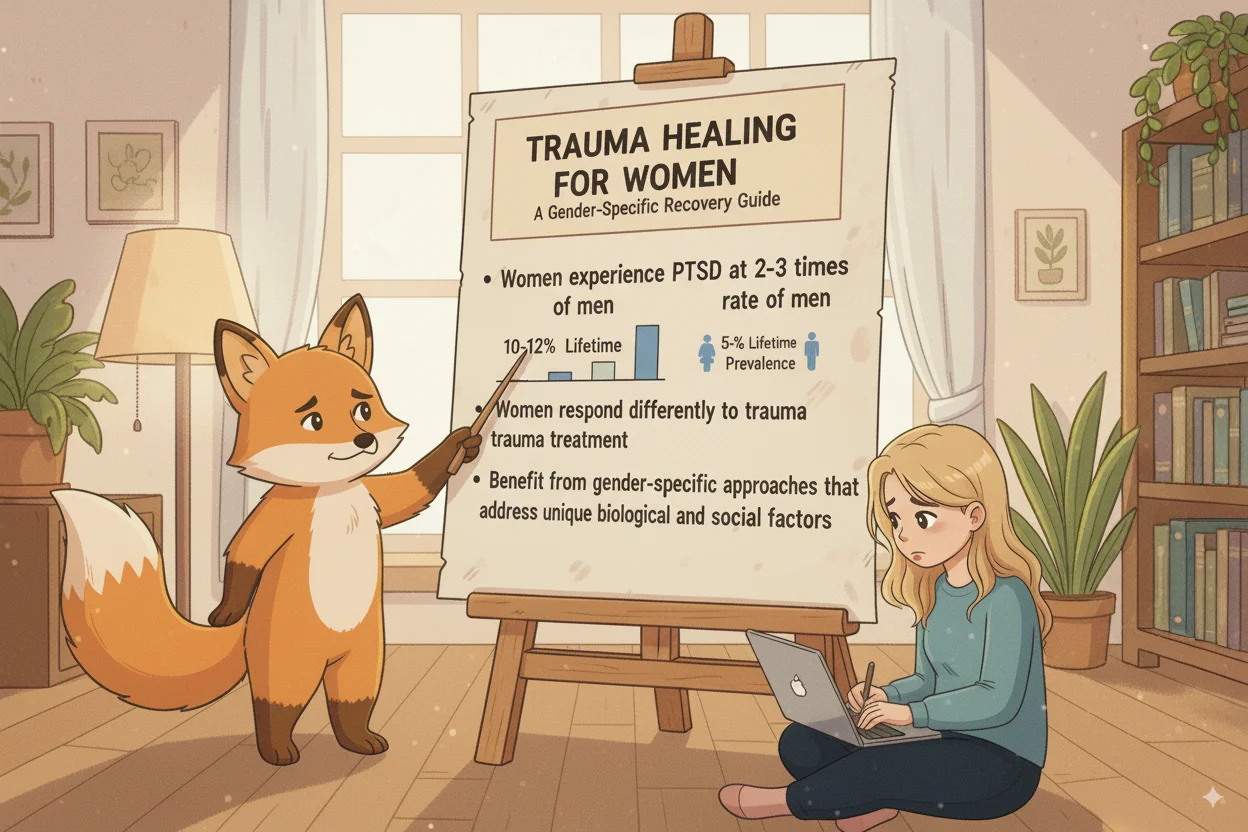
Women experience PTSD at 2-3 times the rate of men and benefit from gender-specific approaches that address unique biological and social factors. Learn effective trauma recovery strategies designed for women.
Why Women Need Different Trauma Treatment Approaches
Women experience PTSD at 2-3 times the rate of men, with 10-12% lifetime prevalence compared to 5-6% in men. Research reveals women respond differently to trauma treatment and benefit from gender-specific approaches that address unique biological and social factors.
Understanding Women's Trauma Response
Biological Differences in Trauma Processing
Hormonal influences:
- Estrogen affects memory consolidation during trauma
- Menstrual cycle phase impacts trauma symptom severity
- Pregnancy and postpartum create vulnerability periods
- Menopause reduces natural stress buffering
Brain structure differences:
- Women show greater amygdala activation during trauma recall
- Hippocampus (memory center) more affected by chronic stress
- Prefrontal cortex connectivity differs, affecting emotional regulation
Social and Cultural Factors
Women are more likely to experience:
- Childhood sexual abuse (1 in 4 vs 1 in 6 men)
- Intimate partner violence (1 in 4 lifetime prevalence)
- Complex trauma from repeated victimization
- Secondary trauma from caregiving roles
Types of Trauma Affecting Women Disproportionately
Sexual Trauma
Statistics: 81% of women experience sexual harassment or assault Unique impacts: Body image issues, sexual dysfunction, hypervigilance in relationships Recovery focus: Reclaiming bodily autonomy, rebuilding trust
Intimate Partner Violence
Recognition signs: Physical, emotional, sexual, financial, or digital abuse Complex dynamics: Trauma bonding, learned helplessness, economic dependence Recovery challenges: Safety planning, rebuilding identity, breaking isolation
Birth Trauma
Prevalence: 30% of women report traumatic birth experiences Symptoms: PTSD symptoms related to delivery, fear of future pregnancies Treatment needs: Processing medical trauma, addressing anxiety about motherhood
Intergenerational Trauma
Definition: Trauma passed down through families and cultures Impact: Higher rates of anxiety, depression, and PTSD in daughters Healing: Understanding family patterns, breaking cycles
Evidence-Based Treatment Approaches for Women
Trauma-Focused CBT (TF-CBT)
Why it works for women:
- Addresses cognitive patterns specific to female socialization
- Incorporates safety planning essential for ongoing threats
- Focuses on self-blame reduction common in women
Treatment components:
- Trauma narrative processing
- Cognitive restructuring of shame and guilt
- Exposure therapy for avoidance behaviors
- Relapse prevention planning
Research outcomes: 70% of women show significant PTSD reduction in 12-16 sessions
EMDR for Women's Trauma
Advantages:
- Doesn't require detailed verbal processing (helpful for shame)
- Addresses body-based trauma memories
- Effective for complex trauma histories
Gender-specific adaptations:
- Resource building phase longer for women with complex trauma
- Body awareness integration for sexual trauma survivors
- Future templating for safety and empowerment
Success rates: 90% of women with single-incident trauma recover in 3-6 sessions
Somatic Approaches
Why women benefit:
- Women often store trauma in the body
- Addresses disconnection from physical self
- Rebuilds sense of safety in the body
Techniques include:
- Body awareness exercises
- Breathing and movement
- Boundary setting practices
- Grounding through physical sensation
Group Therapy Benefits for Women
Research shows women benefit more from group support:
- Reduces shame and isolation
- Provides modeling of healthy relationships
- Addresses common patterns (people-pleasing, self-sacrifice)
- Creates sisterhood and mutual support
Effective group formats:
- Trauma recovery groups
- DBT skills groups
- Art or expressive therapy groups
- Support groups for specific traumas
The Role of Relationships in Women's Trauma Recovery
Attachment and Trauma
Women's sense of self often develops through relationships. Trauma disrupts this, creating:
- Fear of abandonment
- Difficulty trusting
- People-pleasing behaviors
- Loss of personal boundaries
Healing Through Connection
Safe relationships promote recovery:
- Therapeutic relationship as corrective experience
- Supportive friendships reduce PTSD symptoms by 40%
- Healthy romantic relationships aid long-term recovery
- Mother-daughter healing impacts intergenerational trauma
Addressing Women-Specific Trauma Symptoms
Body Image and Sexuality
Common issues:
- Disconnection from physical self
- Sexual dysfunction or avoidance
- Eating disorders as trauma response
- Self-harm behaviors
Treatment approaches:
- Body-positive therapy
- Sexual trauma-informed counseling
- Mindful movement and yoga
- Art therapy for body image
Motherhood and Trauma
Unique challenges:
- Hypervigilance about children's safety
- Difficulty with physical intimacy during pregnancy/nursing
- Birth trauma affecting bonding
- Intergenerational trauma concerns
Support strategies:
- Trauma-informed prenatal care
- Postpartum PTSD treatment
- Mother-infant therapy
- Parenting support groups
Cultural Considerations in Women's Trauma Treatment
Addressing Cultural Stigma
Different cultures view trauma and mental health differently:
- Some cultures discourage discussing personal problems
- Religious beliefs may conflict with treatment approaches
- Family loyalty may prevent disclosure of family trauma
- Economic dependence may limit treatment options
Culturally Responsive Treatment
Effective approaches include:
- Bilingual therapists when needed
- Understanding cultural context of trauma
- Incorporating cultural strengths and resources
- Addressing immigration trauma and discrimination
Creating Your Women-Focused Trauma Recovery Plan
Phase 1: Safety and Stabilization (Months 1-3)
Goals:
- Establish physical and emotional safety
- Learn coping skills for trauma symptoms
- Build therapeutic relationship
- Address immediate crisis situations
Key activities:
- Safety planning if ongoing threats exist
- Grounding and self-soothing techniques
- Basic emotion regulation skills
- Building support network
Phase 2: Trauma Processing (Months 3-12)
Goals:
- Process traumatic memories safely
- Reduce PTSD symptoms
- Address trauma-related beliefs
- Rebuild sense of self
Treatment options:
- EMDR or trauma-focused CBT
- Narrative therapy approaches
- Somatic experiencing
- Expressive arts therapy
Phase 3: Integration and Growth (Months 6-18)
Goals:
- Integrate healing into daily life
- Rebuild relationships and intimacy
- Develop future goals and dreams
- Prevent relapse
Focus areas:
- Relationship skills training
- Career or education planning
- Parenting support if applicable
- Spiritual or meaning-making work
Self-Care Strategies During Trauma Recovery
Daily Practices
Morning routine:
- 5 minutes of gentle stretching or movement
- Positive affirmations focused on safety and strength
- Nutritious breakfast to stabilize mood
Throughout the day:
- Regular check-ins with body sensations
- Boundary-setting practice
- Connection with at least one supportive person
Evening routine:
- Journaling or creative expression
- Relaxation techniques
- Preparing safe sleep environment
Weekly Practices
- Engage in one enjoyable activity for yourself
- Spend time in nature
- Practice saying "no" to overwhelming requests
- Connect with trauma recovery community
Red Flags: When to Seek Immediate Help
- Suicidal thoughts or self-harm impulses
- Substance abuse as primary coping mechanism
- Inability to care for children or fulfill basic responsibilities
- Flashbacks or dissociation that interfere with daily life
- Isolation lasting more than two weeks
Building Resilience: Long-Term Recovery Strategies
Developing Personal Strengths
Research identifies key resilience factors for women:
- Strong sense of personal identity
- Ability to form and maintain relationships
- Meaning-making and spiritual beliefs
- Problem-solving skills and flexibility
- Self-compassion and self-care practices
Creating Post-Traumatic Growth
Many women report positive changes after trauma recovery:
- Increased empathy and compassion
- Stronger relationships and boundaries
- Clarified values and priorities
- Spiritual growth and meaning
- Advocacy for other survivors
Resources and Support
Crisis Resources
- National Sexual Assault Hotline: 1-800-656-HOPE
- National Domestic Violence Hotline: 1-800-799-SAFE
- Crisis Text Line: Text HOME to 741741
Finding Trauma-Informed Therapists
- Psychology Today therapist finder
- EMDR International Association directory
- Local rape crisis centers for referrals
- Women's centers and domestic violence organizations
Remember: healing from trauma is not about returning to who you were before - it's about becoming who you were meant to be. With proper support and evidence-based treatment, recovery is not only possible but can lead to profound growth and empowerment.
Need a reading, not another tab?
If this question feels personal, Sisi can help you read the pattern and choose a next move.
Start reading